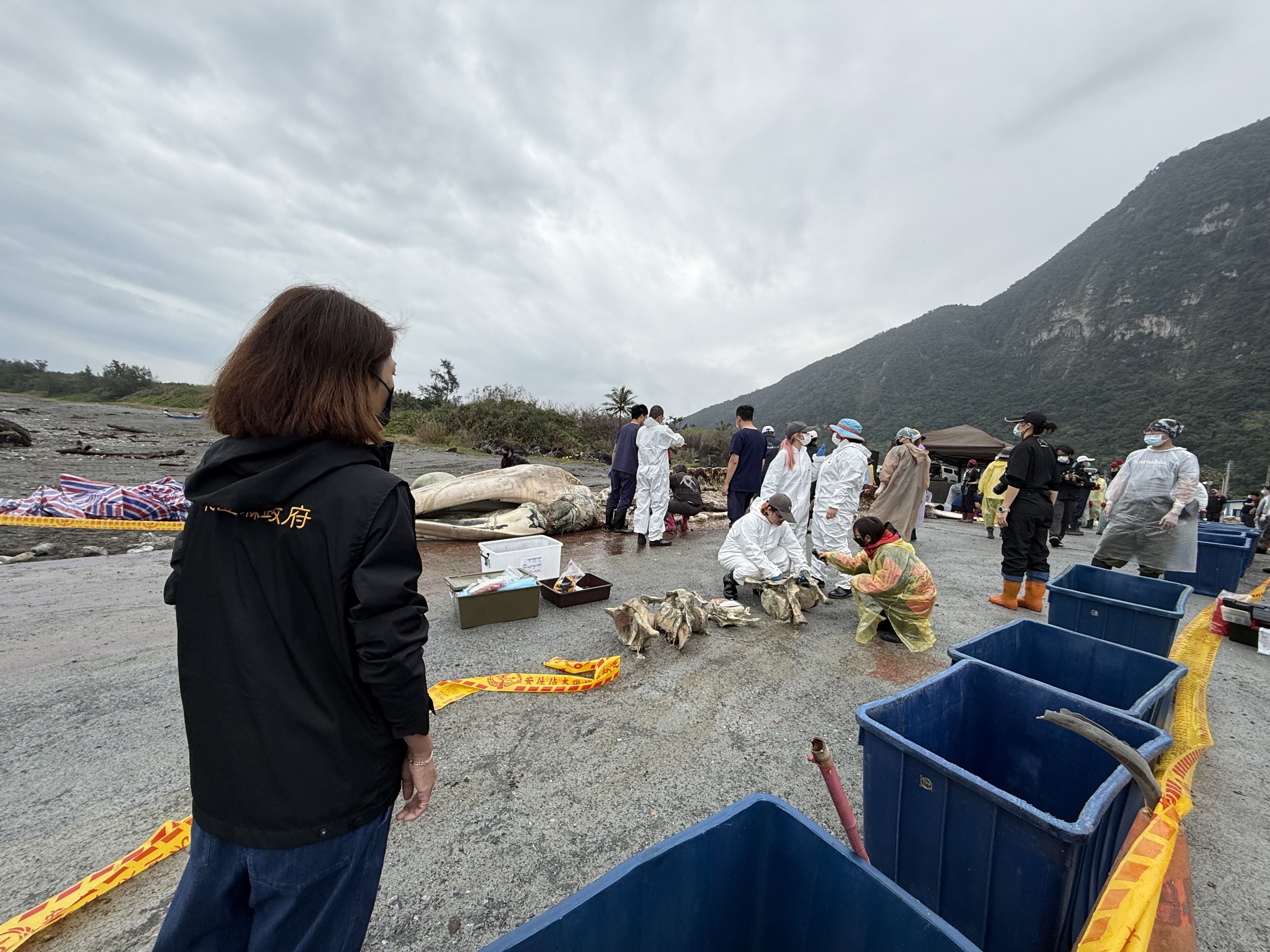
Strong Public Interest in Marine Wildlife Rescue Training as Hualien County Strengthens Conservation Efforts
The Hualien County Government, in partnership with the Taiwan Cetacean Society, will hold the 2026 Hualien County Cetacean Stranding Rescue Training Program on November 1 to raise public awareness of marine wildlife conservation and improve knowledge of reporting and responding to stranded whales, dolphins, and sea turtles. Following an enthusiastic response to registration, the county government has expanded enrollment to 50 participants. Through expert instruction, practical experience, and case studies from Hualien, the program aims to equip more residents with the knowledge needed to respond appropriately to marine wildlife strandings and strengthen community involvement in ocean conservation.
Hualien County Magistrate Hsu Chen-Wei emphasized that Hualien is home to rich and valuable marine ecosystems, and protecting these resources requires both professional expertise and public participation. Guided by the United Nations Sustainable Development Goals (SDGs), the county government has incorporated sustainability into its policy framework, with particular emphasis on SDG 14, Life Below Water. Working with the Ocean Conservation Administration (OCA) under the Ocean Affairs Council and professional organizations, the county has strengthened marine wildlife rescue operations and conservation education. Hsu noted that the strong response to the training program reflects growing public interest in marine conservation. She expressed hope that educational outreach would help residents apply conservation knowledge beyond the classroom and encourage more people to take an active role in protecting marine life.
Whales, dolphins, and sea turtles play important roles in marine ecosystems, and prompt reporting and appropriate initial responses are essential when strandings occur. However, rescuing live stranded animals requires specialized knowledge of their physiological conditions, the surrounding environment, and proper handling procedures. Well-intentioned attempts to touch, move, or push stranded animals back into the sea can cause further injury. Understanding how to report a stranding and maintain safety at the scene is therefore a critical part of effective marine wildlife conservation.
The training session will take place on November 1 from 9:30 a.m. to 3:30 p.m., led by specialists from the Taiwan Cetacean Society. The program will cover practical rescue procedures for stranded cetaceans and sea turtles, with a particular focus on local cases. Participants will examine the response to a fin whale stranding in Hualien earlier this year, exploring the challenges involved in managing large whale strandings, from initial on-site response and professional assessment to subsequent handling procedures. The course will also introduce rescue protocols for live cetaceans and sea turtles, reporting mechanisms, and essential safety precautions to help participants develop sound judgment and a better understanding of emergency response.
According to the Hualien County Government, marine wildlife rescue efforts are carried out through the Ocean Conservation Administration's Marine Wildlife and Ecological Conservation Program and the Marine Animal Rescue Network (MARN). Working alongside relevant agencies and professional rescue teams, the county coordinates the reporting, rescue, handling, and documentation of stranded marine animals, including cetaceans and sea turtles. In addition to strengthening the rescue network, the county promotes public education and case-based learning to improve understanding of marine wildlife and the importance of professional intervention.
Chen Shu-Wen, Director-General of the Hualien County Government's Department of Agriculture, reminded the public that anyone encountering a stranded whale, dolphin, or sea turtle should immediately report the sighting by calling the Coast Guard Administration's 118 hotline. Callers should provide the animal's location and condition as accurately as possible while maintaining a safe distance. Members of the public should not touch, feed, move, or attempt to return the animal to the sea, as improper handling may cause further harm or interfere with rescue operations.
The county government also highlighted the "Three Dos and Four Don'ts" guidelines for responding to stranded cetaceans. The three recommended actions are to keep the animal upright, maintain moisture, and monitor its breathing and heart rate. The four precautions are to avoid exposing the animal to direct sunlight and wind, stay clear of its head and tail, refrain from pushing, dragging, or pulling it, and keep noise to a minimum. However, these measures require professional assessment and supervision. Members of the public should prioritize reporting the incident and securing the area, assisting with hands-on rescue only when instructed by trained personnel to ensure the safety of both people and animals.
The Hualien County Government emphasized that marine conservation extends beyond emergency responses to stranded wildlife. It also depends on long-term education, public awareness, and community cooperation. The county will continue working with professional organizations and local partners to expand marine wildlife rescue training and conservation education, encouraging more residents to understand and care for marine ecosystems. Through proper reporting, informed responses, and collective action, Hualien aims to protect its valuable marine biodiversity for future generations.
Sources: Hualien County Government
