Confronting Climate Change! Yunlin Smart Water Resources Climate Adaptation Forum Brings Together Government, Industry, Academia, and Research Sectors to Build a Resilient Circular Water Resource City


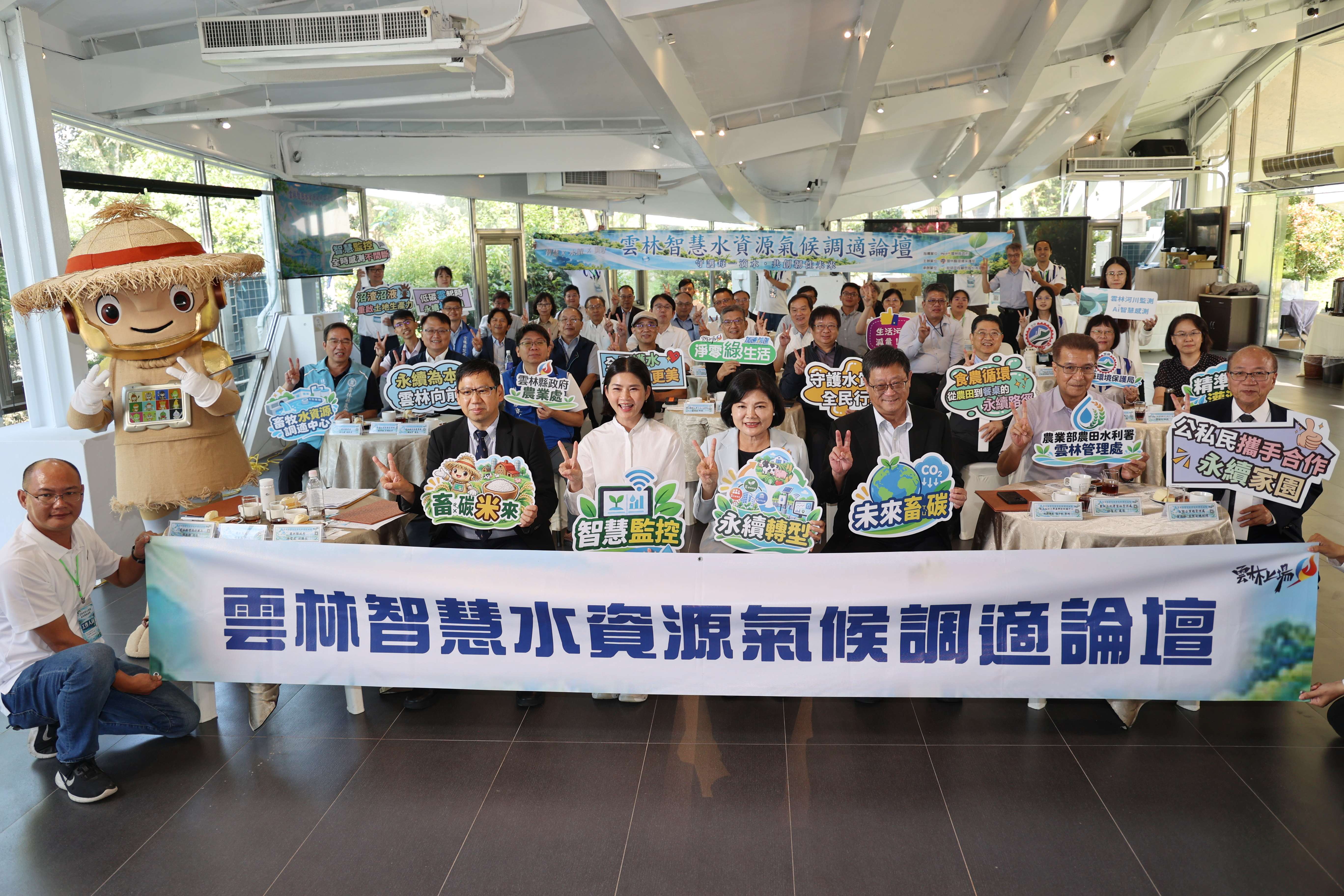
The Yunlin County Government is actively promoting sustainable water resource adaptation and circular water use. On October 27, Yunlin County Magistrate Chang Li-shan, accompanied by Deputy Magistrate Chen Pi-jun, Director Chang Chiao-wei of the Yunlin Environmental Protection Bureau, and Acting Director Tsai Keng-yu of the Agriculture Department, attended the “Yunlin Smart Water Resources Climate Adaptation Forum.” Magistrate Chang expressed her sincere appreciation to former Minister without Portfolio Chang Tzu-ching, as well as representatives from central government agencies, local governments, academic institutions, and private enterprises who gathered in Yunlin to discuss water supply security, smart water resource management, and sustainable adaptation strategies under climate change. As global climate change intensifies and extreme weather increasingly disrupts the balance between water supply and demand, the forum aimed to chart a more resilient blueprint for Yunlin’s future water resource development.
Facing climate change, water governance should not focus solely on “where to find water during shortages.” It should also address “how to retain water during abundance and allocate it effectively during droughts.” To this end, the Yunlin County Government has actively promoted the concept of a “Water Bank,” envisioning Yunlin as a large-scale water storage system. Through a diverse range of strategies, including flood detention and storage, rainwater harvesting, reclaimed water utilization, agricultural return flow reuse, and groundwater recharge, the county seeks to integrate water storage, allocation, and recycling. These measures are designed to ensure that water can be effectively retained, stored, distributed, and utilized, thereby gradually reducing dependence on a single water source while enhancing overall water supply security and climate resilience.
Magistrate Chang Li-shan pointed out that Yunlin is a major agricultural and livestock-producing county. Through water recycling and reuse, water resources can be made more abundant and sustainable. As high-tech industries continue to establish operations in the county, both reclaimed water and tap water will play increasingly important roles in future water supply. With the support and expertise of scholars and specialists participating in the forum, Yunlin will gain valuable knowledge, methodologies, and strategies to better conserve its precious water resources. Furthermore, regarding county-managed rivers, particularly the upper, middle, and lower sections of the New Huwei River, efforts to improve water storage and recycling systems will not only provide future water sources for high-tech industries but also serve as a significant milestone for agricultural transformation, industrial development, and environmental sustainability in Yunlin.
Centered on the themes of “Cross-Sector Integration, Smart Adaptation, and Circular Sustainability,” the forum combined government policy, academic research, and industrial innovation technologies to facilitate professional exchanges on water resource adaptation strategies, water supply resilience, and technical feasibility. The outcomes of these discussions will serve as important references for the continued enhancement of the “Yunlin Sustainable Water Resource Adaptation Planning Project.” Through the integration of diversified water sources and smart management, the county aims to establish a resilient water supply system tailored to local needs.
Another major highlight of the forum was the signing of the “Livestock Carbon Rice Sustainable Circular Precision Irrigation MOU” by the Irrigation Agency, Yunlin County Farmers’ Association, Formosa Plastics Group, Ching Hsin Environmental Engineering Co., Ltd., together with the Yunlin Environmental Protection Bureau and the County Government’s Agriculture Department. Through cross-sector collaboration, the initiative integrates livestock nutrient resources, agricultural irrigation, environmental monitoring, and smart control technologies. Combined with data on soil moisture, field water levels, and crop growth requirements, the project seeks to establish a precision irrigation model capable of dynamically adjusting to local conditions. This approach will help agricultural water management transition from traditional experience-based irrigation to data-driven irrigation, improving water-use efficiency, reducing groundwater extraction and land subsidence pressures, and advancing both livestock resource recycling and sustainable agricultural development.
Director Chang Chiao-wei of the Yunlin Environmental Protection Bureau noted that this collaboration also incorporates corporate ESG principles. The goal is for corporate sustainability efforts to extend beyond factory-based energy conservation and carbon reduction initiatives by “moving beyond industrial sites and into rural communities and farmlands.” Leveraging corporate technologies, resources, and management capabilities, the initiative will support farmers in adopting smart monitoring systems and precision irrigation techniques, reducing unnecessary irrigation and energy consumption associated with water pumping. In the future, accumulated monitoring data will help establish mechanisms for measuring and verifying water-saving and carbon reduction outcomes, realizing an ESG vision in which businesses contribute, farmers benefit, and the environment improves.
Director Chang emphasized that water resource adaptation is not merely a matter of developing new water sources or constructing infrastructure. It is an integrated governance effort that combines smart technologies, circular economy principles, sustainable agriculture, and corporate social responsibility. The forum and MOU signing mark an important starting point for cross-sector collaboration. Going forward, Yunlin will continue promoting efforts to “store water effectively, use water more precisely, recycle resources, and channel corporate ESG capabilities into agriculture and local development,” jointly creating a development model characterized by water resource circulation, agricultural sustainability, corporate prosperity, and environmental well-being, while steadily advancing toward the vision of becoming a “Resilient Circular Water Resource City.”
Sources: Yunlin County Government
